


Ready to build a stronger brand for your digital product?
When we’re designing digital products and trying to make a brand feel younger, funnier, and more alive, there’s almost always a moment when the conversation lands on one thing: the mascot.
“I mean, who’s gonna hate a cute little character doing something exaggerated just to make people laugh? ”
And that's exactly the appeal.
But the truth is, adding a mascot isn’t just a visual decision but a strategic commitment.
To explore that, we’ll compare a few examples, including OpenClaw, Duolingo, Mailchimp, and GitHub, to see when a mascot actually fits into your product strategy and when it doesn’t.
When the product can’t sell itself, a mascot can
If you’ve been hanging around tech or AI Twitter lately, your feed has probably been taken over by a bright red crawfish. At first, it looks like a Cajun seafood ad. But then you click, and it turns out to be an new AI assistant called OpenClaw.
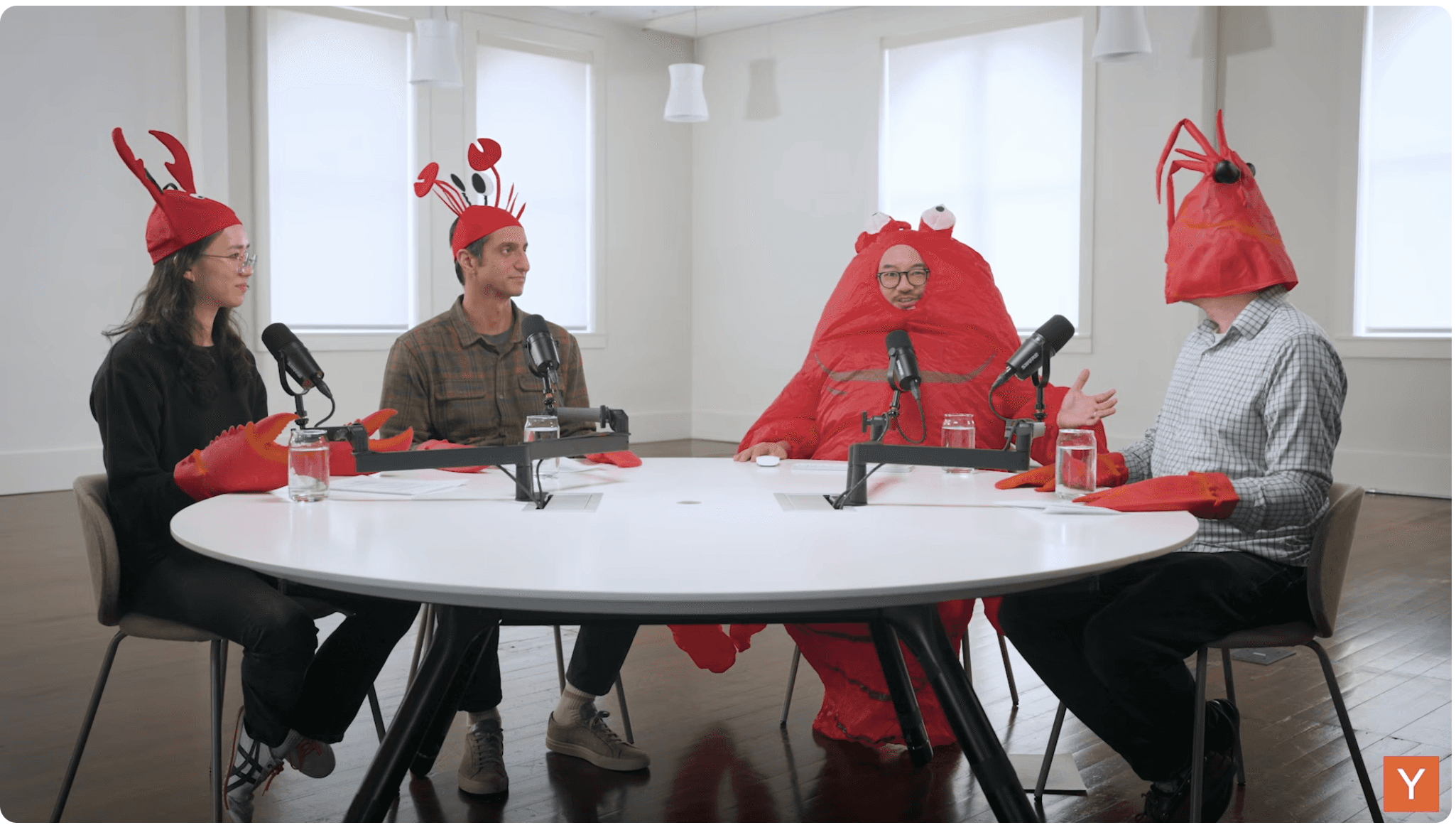
Screenshot from a Y Combinator YouTube video discussing OpenClaw.
This bright red character gives OpenClaw something most of its competitors don’t have: instant recognizability.
All that visibility tells us something about their priorities. At this stage, the primary goal is clearly market recognition and user acquisition, which is a natural focus for any early-stage product.
At the same time, compared to competitors like Manus AI, OpenClaw isn’t built for everyone. Its target users are people with at least some technical background. That higher barrier to entry makes it harder to market to a broader audience.
So how do they solve that tension?
This is where a strong, icon-like visual becomes especially powerful. A distinctive character like the red crawfish helps the product stand out in a feed and gives people a reason to pause.
In an attention-driven world, it’s simple. More attention. More users. More revenue.
So if your product is still in its early stages and your goal is market recognition and user acquisition, but the product itself works against that, a mascot is something you should seriously consider.
Mascot as a persona for retention
Mascots aren’t just for early-stage startups or market recognition. In some cases, they shape how users emotionally interact with a product over time. That’s exactly what Duolingo is doing today.
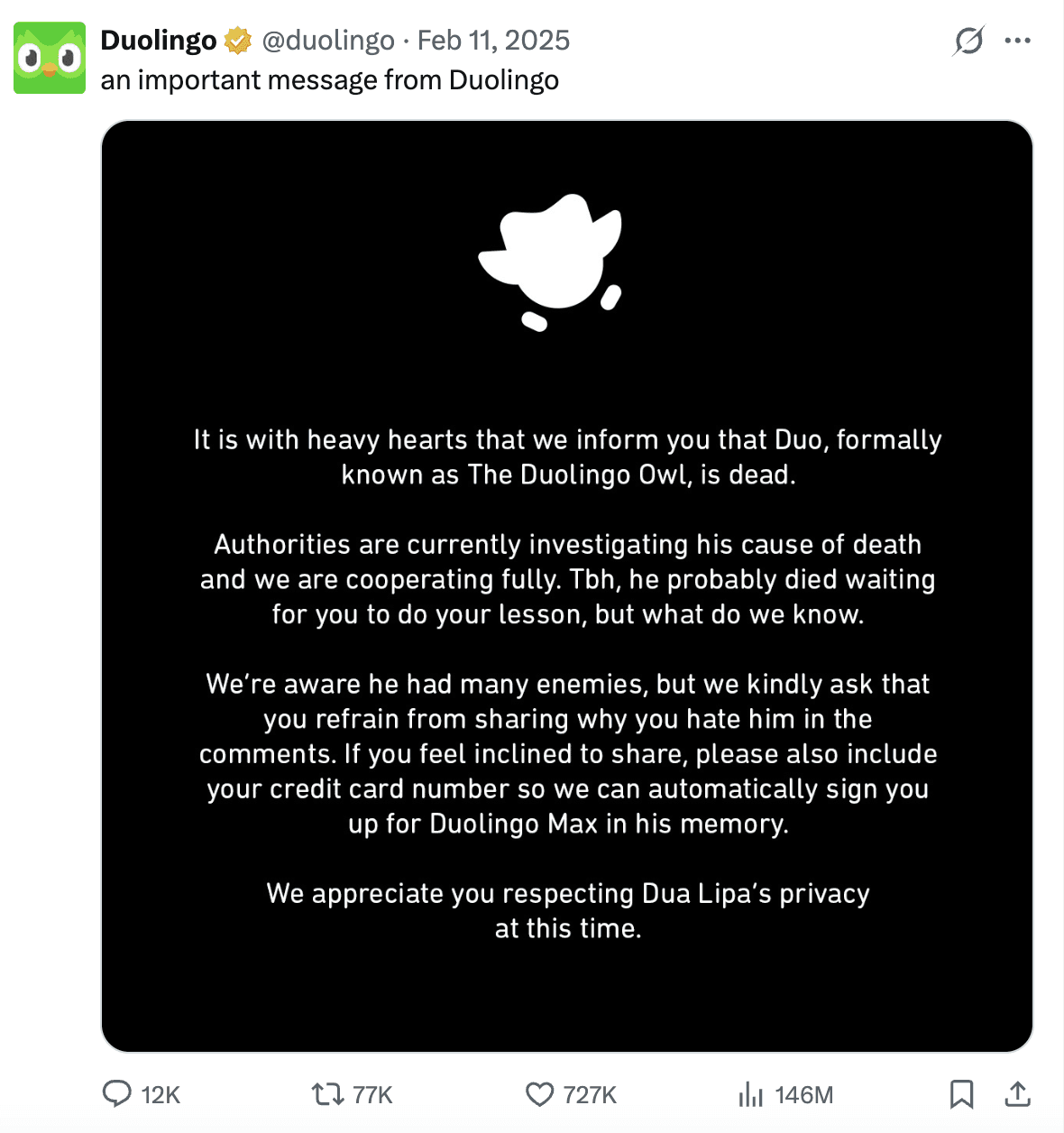
Screenshot from Duolingo’s social media, where Duo the owl is humorously declared “dead.”
Duolingo’s “obituary” for Duo sparked a wave of attention online in 2025. In an AI-driven world, a mascot with this much personality still feels refreshing. The green owl, constantly making goofy jokes, has taken on a life of its own.
But for a company at Duolingo’s stage, this kind of content is no longer about recognition. It has become one of the brand’s core assets, helping support the product itself. If you look more closely at the product experience, it becomes clear why. Duolingo relies heavily on user retention. Its success depends on whether users keep coming back and stay engaged over time.
In that context, a highly personified mascot becomes part of how the product works. It reminds users, encourages them, and sometimes even playfully teases them. All of this helps build an emotional connection and gradually nudges user behavior.
So if you’re working on a mature product that depends on habit formation, long-term engagement, or ongoing communication with users, a highly personified mascot is not just decoration, but a core part of the experience.
When personality gets in the way of scale
Mascots don’t always grow with the product. Sometimes, they fade. Mailchimp’s Freddie the monkey is a textbook example.
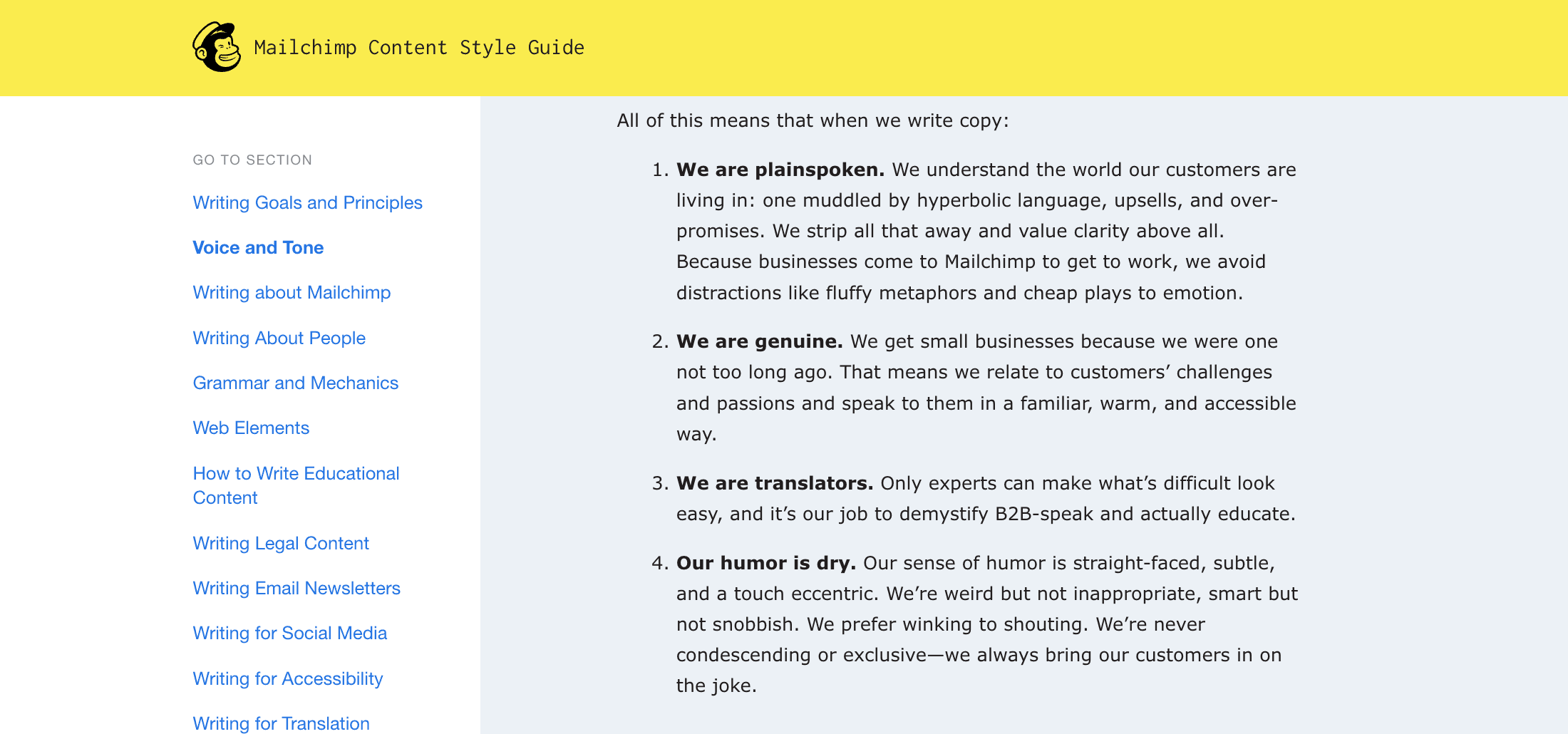
Screenshot from Mailchimp’s content style guide, outlining its distinctive brand voice and tone.
Mailchimp was built for small businesses and non-technical users, and it became well known for its casual, witty brand voice. Paired with Freddie, the brand felt quirky, friendly, and refreshingly different from the more serious, utilitarian tools in the same space.
That personality worked. And the company knew it. They even dedicated an entire section of their style guide to voice and tone.
But as Mailchimp grew into a more comprehensive marketing platform, Freddie’s role started to shift, from a full character to a more abstract visual symbol. After becoming part of Intuit’s broader product ecosystem, that shift became even more noticeable. Today, Freddie exists mostly as a logo, and much of its personality has already faded into the background.
So if you’re building a tool-driven product, especially one that needs to give people a sense of trust, stability, reliability, and consistency at scale, a mascot may only play a temporary role and won’t hold up as the product grows.
Mascots as Symbols of Community
Not all tool-driven products need to tone down their mascots. It depends. When community, or a sense of belonging, is a core part of the product, a mascot can still make a lot of sense.
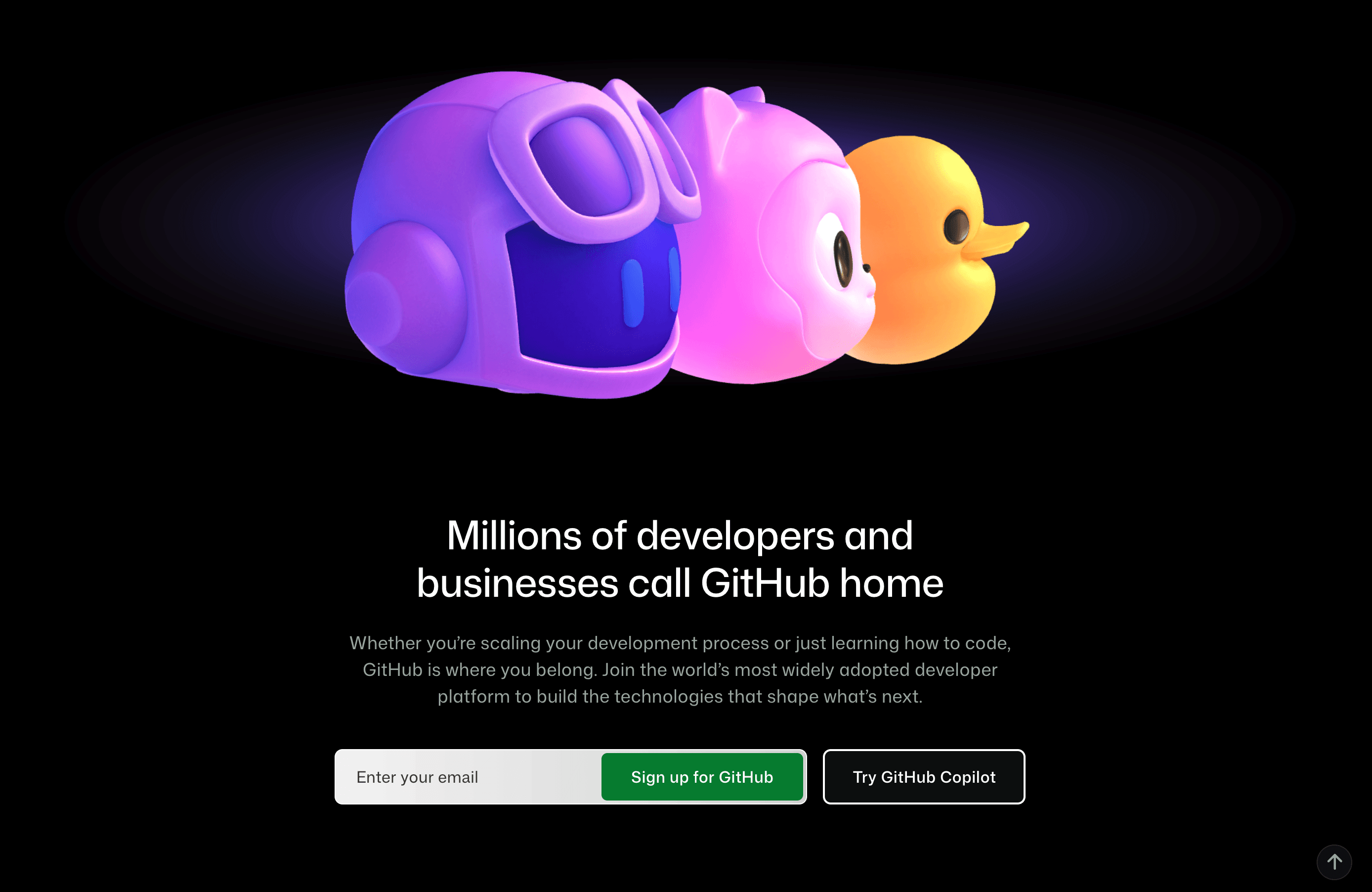
Screenshot from the GitHub website, where multiple characters help reinforce its sense of community.
GitHub, a platform where developers store and share code, s as much about community as it is about the product itself. Developers don’t just use GitHub, they participate in it. That’s why the company describes it as a home for millions of developers.
As the latest wave of AI keeps blowing through the industry, GitHub’s role as infrastructure for developers has only become more important. Instead of relying on a single, simple character like Octocat, GitHub has expanded into a broader set of more refined characters, including Copilot, Mona, and Ducky.
The balance here is delicate. These characters can’t be as loud as Duolingo’s Duo. That would feel out of place in a product that needs to stay stable and reliable for important code and projects. At the same time, they can’t fade into pure symbols like Freddie, or they lose their emotional value.
So if you’re working on a product where community is a core feature, a mascot is absolutely worth considering. The real question is how far you push it. How human should it feel? That depends on what your product is trying to do, whether it’s helping people get things done, or shaping how they feel and behave over time.
So before asking whether you need a mascot, it might be more useful to ask a different set of questions. What kind of product are you building? How does it interact with users? What value does it bring to the market? And what role do branding and marketing actually play in the experience you create for your users?
Once those answers are clear, the role of a mascot tends to fall into place. Not as a shortcut, but as a result.
